“Will This Fade?” Is the Right Question to Ask
Almost nobody asks this question until it’s too late — until a print that’s been sitting on a shelf for fifteen years has gone yellow, or a photo from a drugstore kiosk has shifted an alarming shade of magenta. By then there’s not much to be done except restore it. The good news is that print longevity is not a mystery. It comes down to a handful of measurable factors: the ink, the paper, and how the print is displayed. Understanding those three things tells you almost everything you need to know about whether a print you’re ordering — from us or anyone else — will still look good in twenty, fifty, or a hundred years.
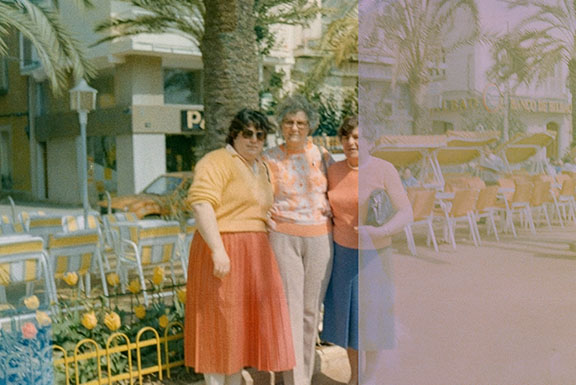
What Actually Causes a Photo Print to Fade
Fading is not random, and it is not really about age either — it is about exposure. Four factors drive almost all print degradation:
- Light, especially UV light: Direct sunlight is the single biggest cause of visible fading. UV radiation breaks down the dye or pigment molecules in a print over time, and the effect compounds daily. A print in direct sun for a few hours a day can show visible fading within a year or two. The same print out of direct light might take decades to show the same change.
- Humidity and temperature: Moisture accelerates chemical breakdown in both the ink and the paper base, and can encourage mold growth in severe cases. Attics, basements, and un-climate-controlled storage are the worst places to keep prints long-term.
- The ink itself: Not all inks are created equal. This is the single biggest, and least understood, factor — and it is the one covered in detail below.
- The paper base: Cheap resin-coated paper with low-grade coatings degrades faster than professional-grade archival paper, independent of what ink sits on top of it.
Dye Inks vs. Pigment Inks — The Difference That Actually Matters
This is the one piece of information that explains most of the gap between a print that lasts a lifetime and one that visibly fades within a decade.
Dye-based inks are liquid dye suspended in a carrier that soaks into the paper's coating. They are cheaper to produce, dry faster, and can render a very wide, vivid color gamut right off the printer — which is exactly why most mass-market labs, drugstore kiosks, and consumer inkjet printers use them. The tradeoff is durability. Dye molecules are more chemically reactive and break down faster under UV exposure and airborne pollutants. This is sometimes called "gas fading" — a print can visibly shift color even in a drawer, away from light entirely, from ozone and other trace gases in ordinary indoor air.
Pigment-based inks use solid, finely ground pigment particles suspended in a carrier, which sit on or bond with the paper surface rather than dissolving into it. Pigments are far more chemically stable — they are, after all, the same basic technology used in artists' paints that have survived for centuries. The tradeoff historically was a narrower color gamut and higher cost, but modern pigment ink sets have closed that gap enormously. What you keep is the durability advantage: pigment prints resist UV fading and gas fading dramatically better than dye prints, under otherwise identical display conditions.
Every print produced at Yellow Lab Imaging uses pigment ink on professional archival paper, rated by independent accelerated-aging testing to last 100 years or more under proper display conditions — under glass, indoors, away from direct sunlight and excess moisture. That is the standard we apply to every order, not an upgrade you have to ask for.
How "100-Year Rated" Claims Are Actually Tested
Archival ratings are not a marketing invention. They come from accelerated aging tests, in which a print is exposed to controlled, intensified light, heat, and humidity over a period of days or weeks to simulate years or decades of real-world display. Fading is measured against a defined threshold of visible color shift. A print rated for 100 years under glass has been tested to that threshold, not just assumed to last based on the materials used. It is worth knowing that these ratings always come with conditions attached — "100 years" almost always assumes indoor display, moderate humidity, and protection from direct sunlight. The same print hung in a sunroom or a humid garage will not last nearly as long, regardless of what the ink and paper are rated for.
Why Big-Box and Drugstore Prints Fade Faster
Mass-market labs are optimized for speed and volume, not longevity. Dye-based inks dry almost instantly, which matters when a machine is producing thousands of prints an hour. The paper is typically a lower-grade resin-coated stock chosen for cost, not archival performance. None of this makes those prints unusable — plenty of people are perfectly happy with a drugstore print of a photo they'll look at for a season or two. But if the print is meant to be a keepsake — a portrait, a wedding photo, a picture of a grandchild that's going in a frame for the next thirty years — the materials matter a great deal more than most people realize when they're ordering.
How to Make Any Print Last Longer
Whether a print came from us or somewhere else, the same practical steps apply:
- Frame behind UV-filtering glass or acrylic if the print will hang anywhere near a window. Standard glass blocks very little UV.
- Avoid direct sunlight entirely — even brief daily exposure adds up faster than most people expect.
- Keep prints out of attics, basements, and garages, where humidity and temperature swings are hardest on both ink and paper.
- Skip old-style "magnetic" or adhesive photo albums. Many use PVC-based plastics and adhesives that off-gas chemicals which actively degrade prints over time. Look for albums labeled acid-free and PVC-free.
- Handle prints by the edges to avoid transferring skin oils onto the surface, which can attract dust and accelerate localized degradation.
- Store loose prints in archival, acid-free boxes if they are not being displayed — the same principle museums and archives use for photographic collections.
What About Prints You Already Have That Have Faded?
If you're reading this because a box of old family photos has already started to yellow, shift color, or fade, the damage is often more fixable than people assume. Photo restoration can correct color shifts, repair physical damage, and produce a new archival print from the corrected file — so the restored version is built to the same 100-year standard going forward. If the originals themselves are fragile, deteriorating, or you simply want a safe digital backup before anything else happens to them, our scanning services create high-resolution digital files you can preserve, share, and reprint from indefinitely.
The Standard We Print To
At Yellow Lab Imaging, archival paper and pigment ink are not a premium tier — they are the only way we print. Every lustre and metallic pearl print we produce carries the same independently rated 100-year archival standard, and every order is personally reviewed before it ships. If you're printing something you want to still look right in twenty or fifty years — not just next season — that's the difference that ends up mattering.
Related Yellow Lab Imaging Services
Have photos that need more than a reprint? Explore our photo restoration services, browse scanning services for originals and film, or see our full photo prints online lineup.